





Why your water heater makes popping noises in Hawaii

Tell a local repair pro what your water heater is doing.

Match me with a pro

That popping comes from sediment sitting at the bottom of the tank. Most homes in Hawaii run electric water heaters, and electric elements sit right down in the tank where that sediment collects. As water heats up underneath that layer, it turns to steam and pushes up through it in little bursts, and that's the popping or knocking you hear. The more sediment built up, the louder and more frequent it gets. It doesn't mean the tank is about to fail, but the heating element is working harder than it should to push heat through that buildup, and that costs you on a power bill that's already high here. Left alone, that extra strain on the element is what tends to shorten how long the water heater lasts before it needs real repair.

A bathroom with a gray towel hanging on a bar against a taupe wall, a glass-enclosed shower with marble-look tile, showerhead and handheld sprayer, a window showing green trees, and a stone countertop with a sink at right.

You turn the shower on and wait for steam that doesn't come. The towel's already on the rail, folded the way you left it last night. Water's running but the mirror stays clear, and underneath the bathroom floor you can hear it again, that popping, like something knocking to get out. You've got maybe ten minutes before everyone else in the house needs this bathroom too. You nudge the handle hotter and still it stays lukewarm, the sound carrying up through the pipe behind the wall. You stand there a second longer than you mean to, listening, before you step in anyway.

Ignore the Noise or Get It Flushed

Leave It

  • The popping will keep happening and probably get louder as more sediment builds up on the tank bottom.
  • That layer sits between the element and the water, so the element works harder to heat the same amount of water.
  • With power costs as high as they are in Hawaii, that extra work shows up on your bill every month.
  • Sediment buildup is one of the most common reasons an electric element burns out early.
  • A tank that's never been flushed can hold years of buildup, and the popping is usually the first sign anyone notices.

Get It Looked At

  • A contractor can flush the tank and clear the sediment causing the noise.
  • Removing that layer lets the element heat water directly again instead of through a layer of scale.
  • A local contractor who works on these tanks all year knows how much buildup is normal for this water and what isn't.
  • Catching it now costs less than waiting for the element to fail outright.
  • You'll be matched with one contractor, not several, so you're not fielding calls from companies you didn't ask for.
  • A tank checked now is one less thing to worry about when you just want the shower to run hot.
A woman with long wavy brown hair in a grey ribbed sweater sits on a couch indoors, looking toward a window, with a potted palm-like plant and fireplace behind her.
A woman with long brown hair wearing a green V-neck top and beige cardigan sits on a light sofa, looking off to the side, with a dining table, lamp and framed picture in the background.
A woman with long dark hair in a cream knit sweater sits on a beige sofa indoors, looking toward a bright window with a houseplant and framed picture in the background.
A woman with long dark hair in a green knit sweater sits on a couch indoors, smiling and looking toward a window with a blurred room behind her.

A pro who works on water heaters

The pro who reaches out is licensed in Hawaii.

There's no charge for the request.

Why electric tanks pop more

The heating element sits low in the tank, right where sediment settles. Gas burners heat from underneath the tank itself, so the fire side never touches the water directly. An electric element sits submerged in the water, inside the tank, with sediment free to pile up around it. Once that layer covers the element, steam forms under it and pushes up through, and that's the popping you hear. Since most homes here run electric water heaters, this is the setup behind almost every noisy tank on the island, not something particular to one brand or one unit.


What the sound is telling you

The noise itself isn't the damage, it's a sign of what's already built up. Each pop is a small pocket of steam breaking free from under the sediment layer, and that's been happening for a while before you ever notice it. The sound usually gets more frequent over time, not less, since the layer keeps growing as more minerals settle out of the water. A tank making this noise daily is holding more sediment than one that pops occasionally, and that gap only widens the longer it sits unaddressed.

A white cylindrical water heater with rust stains and two access panels stands in a basement corner between a painted concrete block wall and a bare concrete wall, with metal pipes running up and alongside it on a concrete floor.
Before you get your water heater repair
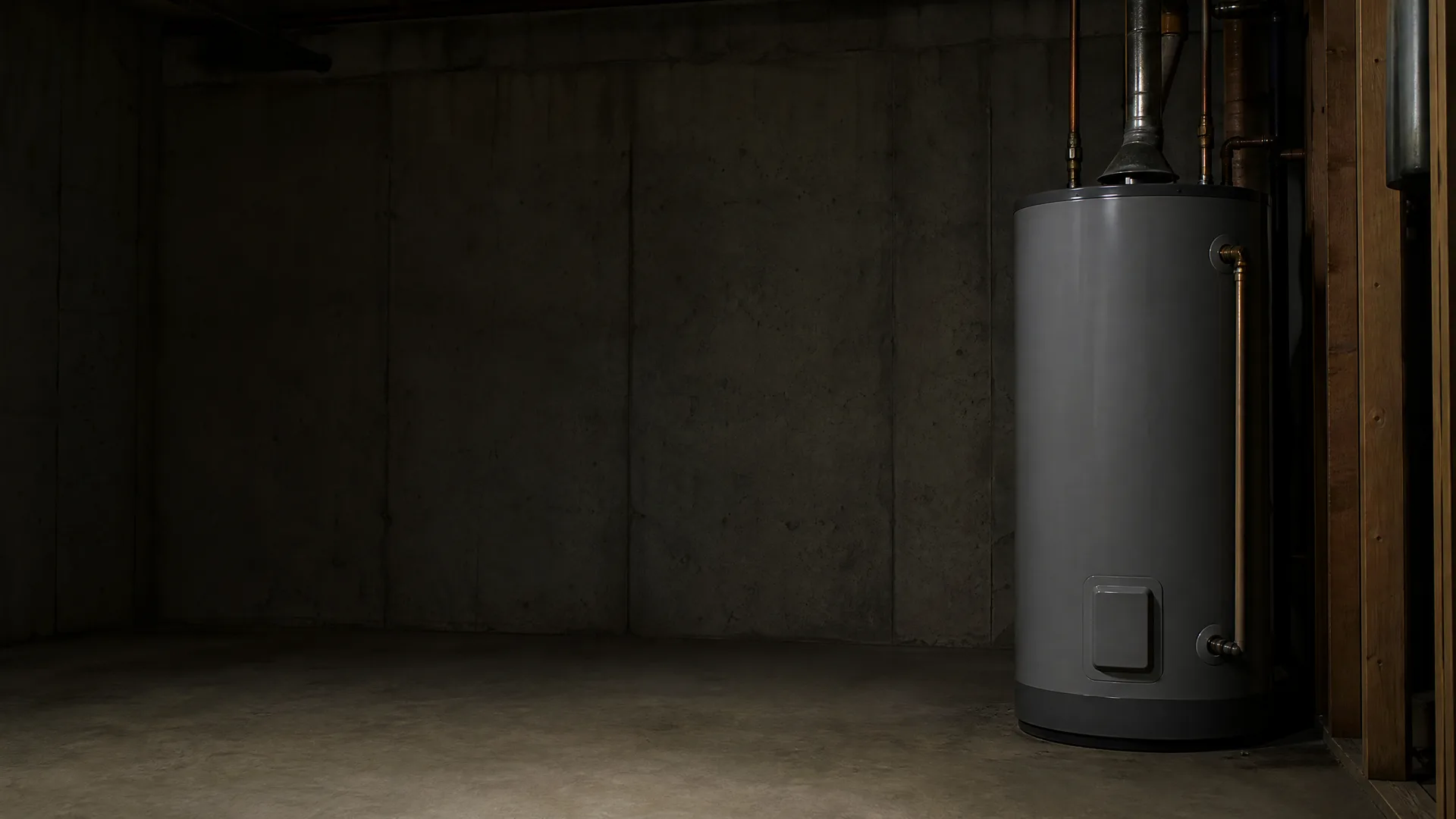
A gray cylindrical water heater standing on a concrete floor in a basement corner, with copper pipes and a metal duct running overhead along bare concrete walls.
After you get your water heater repair
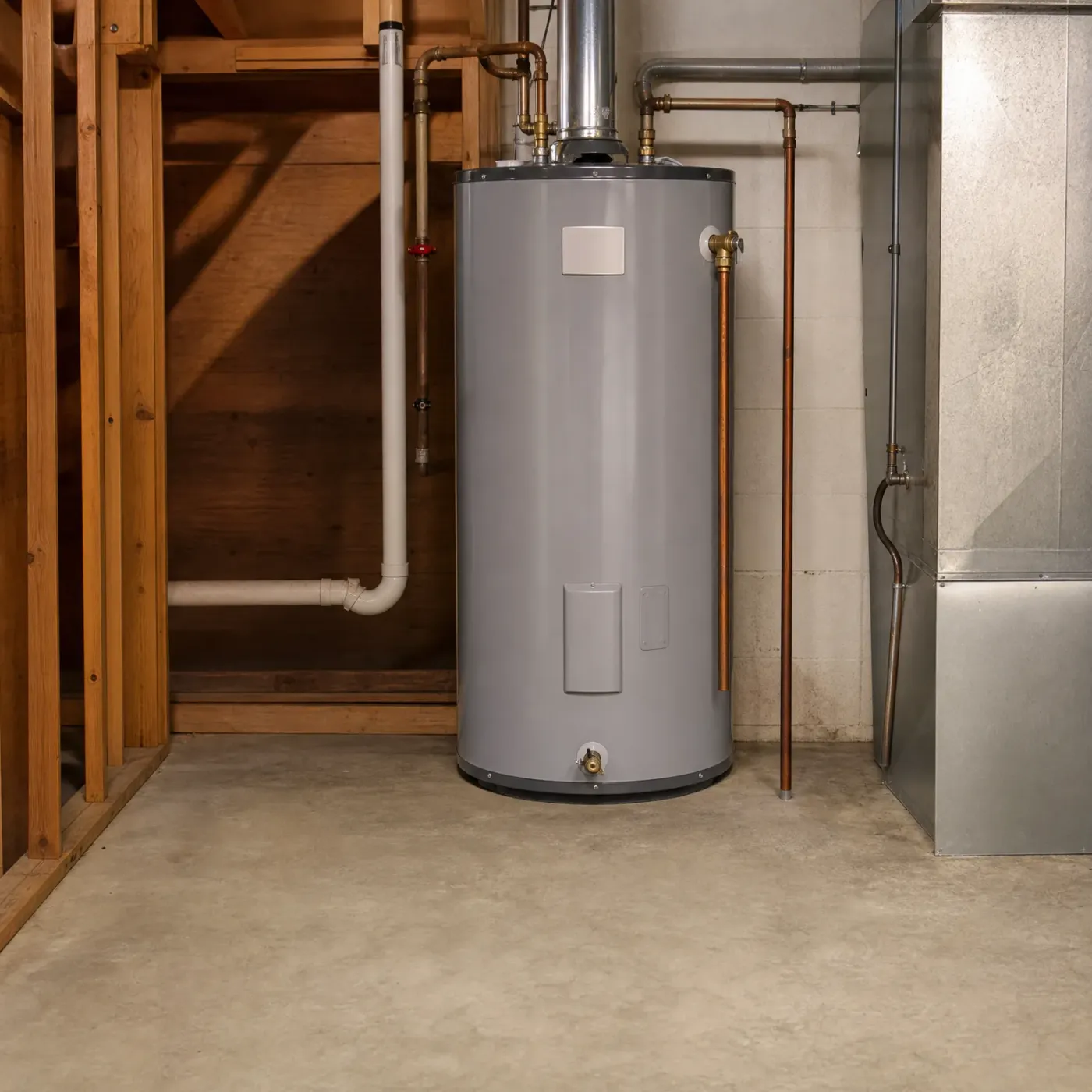
A gray cylindrical water heater with copper piping and access panels stands against a concrete basement wall beside ductwork and vertical pipes.

Tank running clean

This is a tank with little or no sediment on the bottom. Water heats quietly because nothing is sitting between the element and the water it has to warm. The connections at the top stay dry, and the tank does the same job every day without extra strain.

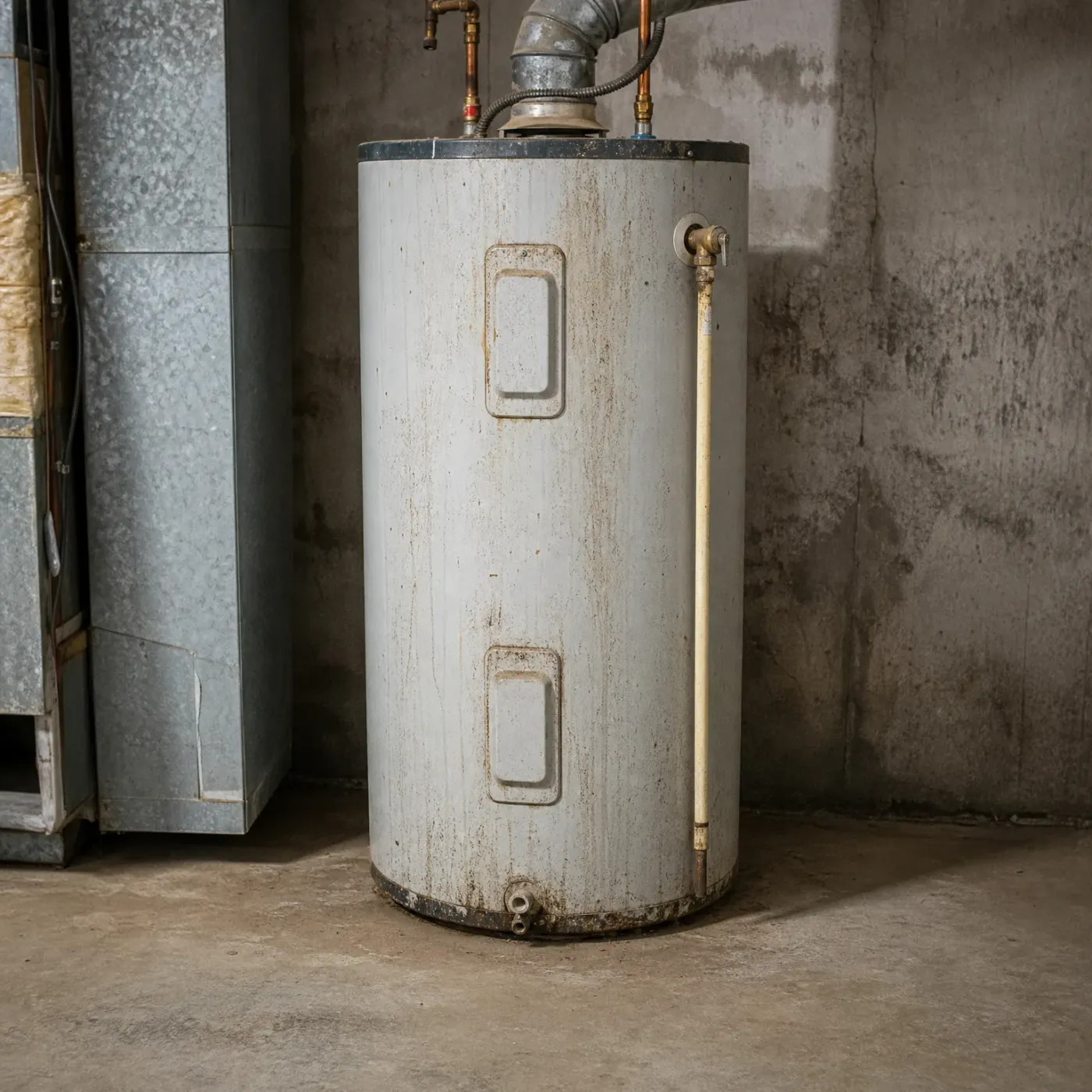
An old rust-streaked cylindrical water heater with two access panels, copper pipes and a flue at the top, and a discharge pipe along its side, standing on a concrete floor beside galvanized ductwork against a bare concrete wall.

Tank full of sediment

Years of buildup have turned this tank's bottom into a hardened layer, and the rust on the outside often shows up on a tank that has worked harder than it should have for a long time. The element underneath that layer is what's popping. Left alone, that buildup only gets thicker.

A gray-haired woman in a cream knit sweater stands in a dimly lit kitchen at night, looking to her right, with a round loaf of bread in the foreground and a dark window and potted plant behind her.
A woman and a sleeping child wrapped together in a cream knitted blanket on a couch, with a potted plant, framed photo and lit lamp in the background.
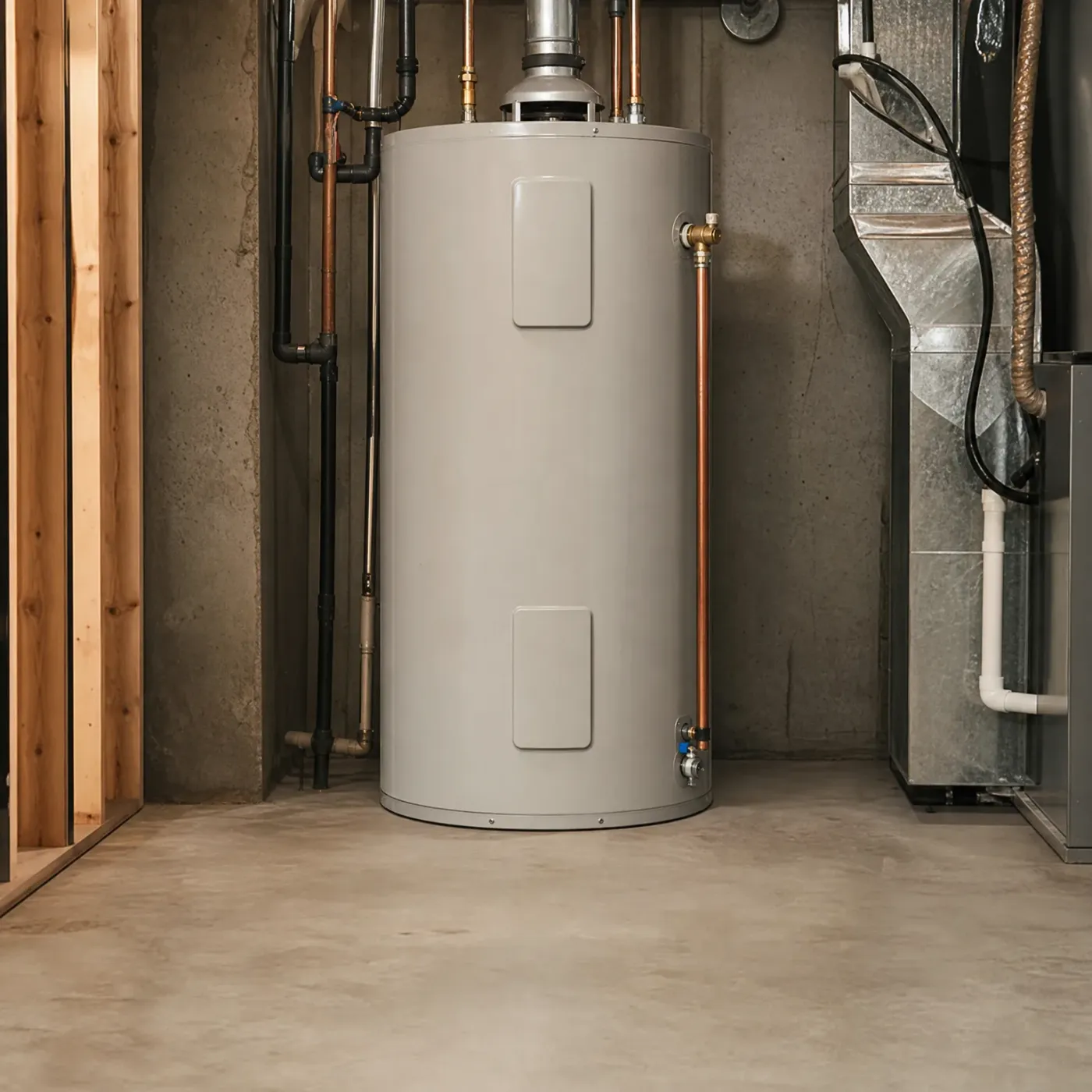
A gray cylindrical water heater stands on a concrete basement floor between an unfinished wood stud wall and a metal furnace duct, with copper and PVC pipes running along the concrete block wall.

What a clean tank sounds like

No popping, no cracking, just the quiet hum of the element doing its job. Water moves through the copper lines above without any noise from the tank itself. Nothing is sitting between the element and the water it has to heat.

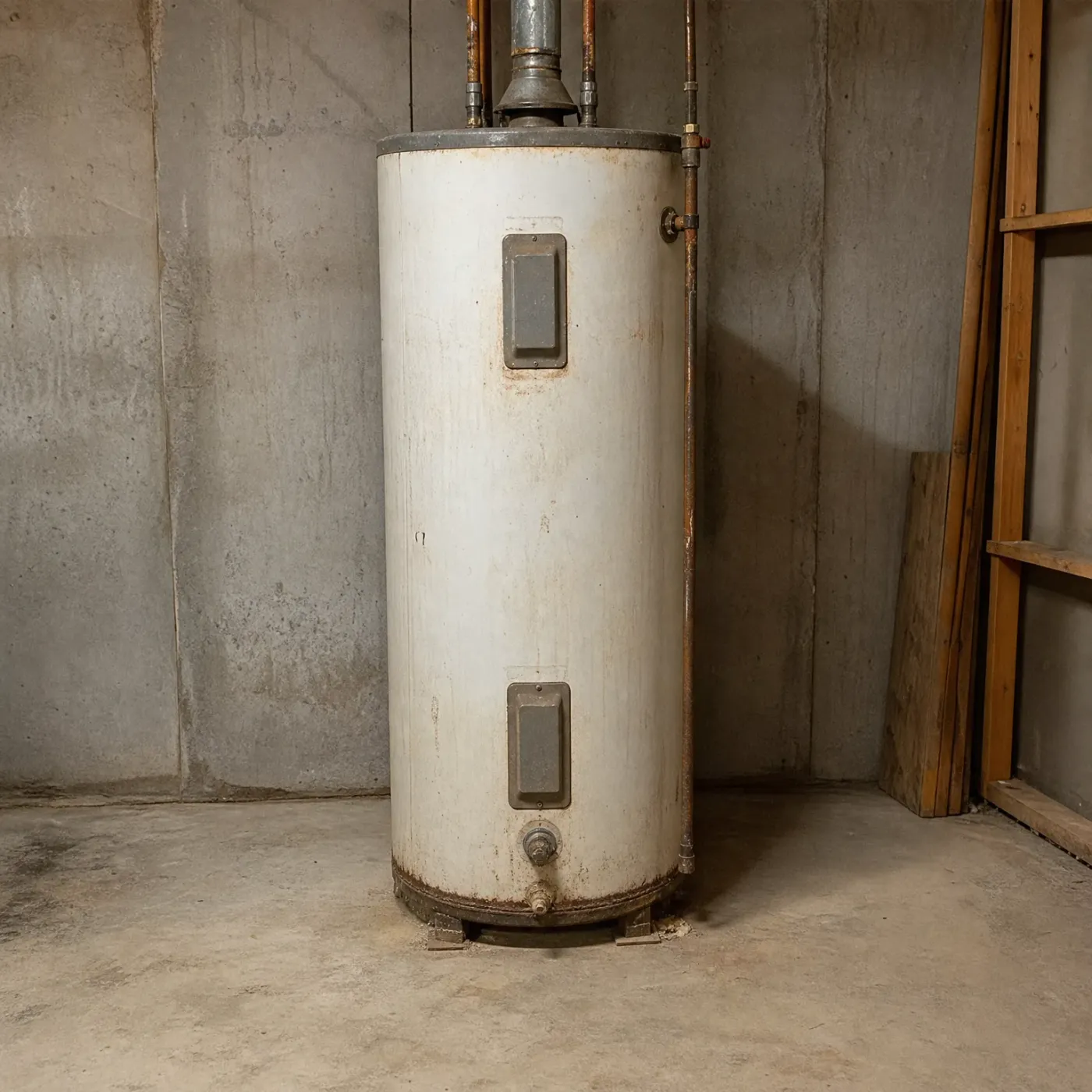
A rusted white cylindrical water heater with two access panels stands in a concrete-walled basement corner, with pipes rising from its top and wooden boards leaning against the wall at right.

What sediment buildup looks like

Rust like this usually means years of sediment and mineral deposits working on the tank from the inside. The popping you hear is steam breaking through that layer at the bottom. Left alone, the tank corrodes faster and the element has to work harder.

43.1% of homes statewide heat with electricity

Electricity heats more homes here than any other fuel, so odds are good your tank has an element sitting in the water the way the page described above. That's the setup sediment builds on, and it's why the popping shows up in so many houses across the state.

ACS 2020-2024 5-year B25040

  1. Sediment settles out of the water and builds up on the tank bottom.

  2. The electric element sits low in the tank, buried under that layer.

  3. Water trapped beneath the sediment heats up before the rest of the tank.

  4. That trapped water turns to steam and pushes up through the layer.

A man seen from behind raises his hand to wave at a woman standing in the open front doorway of a single-story house with gray shingle siding, white columns and a gabled porch entry.

Popping means sediment, and sediment doesn't clear on its own

The noise is the tank telling you what's built up on the bottom. It won't fix itself, and it won't get quieter. Left alone, the layer keeps growing and the element keeps pushing harder through it, which shows up on your power bill before it shows up as a real failure.

A local contractor who works on electric tanks all year can look at yours and tell you how much has built up and what it'll take to deal with it. You'd be matched with one contractor, not a handful calling you back, someone who already knows how these tanks behave in homes like yours and what usually needs attention first. From there you'd know exactly where your water heater stands.

A living room corner with a beige upholstered armchair holding navy and striped cushions, a small round wooden side table with a carved bowl and a potted green plant, a framed landscape picture on a pale wall, built-in shelving, and a curtained window.
A gray cylindrical water heater with copper pipes and a metal flue stands against a concrete wall in a dim basement with a bare concrete floor.

Get your water heater to the right pro

Only one pro gets your request, so you hear from one company.

RepairWater HeaterHawaii
Step 1 of 2

What ZIP code is the job in?