Get in touch with a local installer about a new water heater.
Most water heaters in Hawaii run on electricity, and with power here among the most expensive in the country, an old unit doesn't just risk failing. It costs you every month it keeps running past its prime.
Rust-colored water, a tank that's warm to the touch on the outside, a pilot or heating element that won't hold, or hot water that runs out faster than it used to are all signs worth paying attention to. So is a unit that's old enough that you honestly don't know when it was installed, especially if it came with the house.
Figuring out whether to repair or replace isn't something you can tell from searching online. It depends on the age of your unit, what's actually wrong with it, and what a working water heater will mean for your power bill going forward. That takes someone looking at the actual tank.
Finding that someone is the part that eats your afternoon. Searching for contractors near you, calling a few, explaining the same symptoms three or four times, waiting on quotes that come back at different prices for what sounds like different jobs. None of that tells you whether your water heater actually needs replacing.
This page can take that part off your plate. Answer a few questions about your situation and you'll be matched with a contractor who installs water heaters and knows the demands Hawaii's climate and power costs put on them. They'll reach out to you directly, so you can skip the calling around and get a straight answer about your own tank.
What they find and what they recommend is between you and them. What you get here is the match, and the save on everything it usually takes to find someone worth trusting with the job.
How do I know if my water heater needs to be replaced?
You've noticed something off about your water heater, whether that's rust in the water, a popping sound from the tank, or just the fact that it's been running for years without a problem. You're trying to figure out if this is a sign of real trouble or just something to keep an eye on, and whether it's worth replacing now or waiting until it actually fails.
Rust-colored water, a leaking tank, or a water heater over 10 to 12 years old are the clearest signs it needs replacing
Rust in your hot water usually means the tank is corroding from the inside, and once that starts, it doesn't reverse. A puddle at the base of the unit means the tank itself has failed, not just a loose fitting. Popping or rumbling sounds come from sediment building up at the bottom, which makes the unit work harder to heat the same amount of water. Most tank water heaters last 10 to 12 years, and in Hawaii, with electric rates among the highest in the country, an aging unit past that mark is costing you more each month just to keep running. If yours is in that range and showing any of these signs, replacing it now costs less than waiting for it to fail outright.
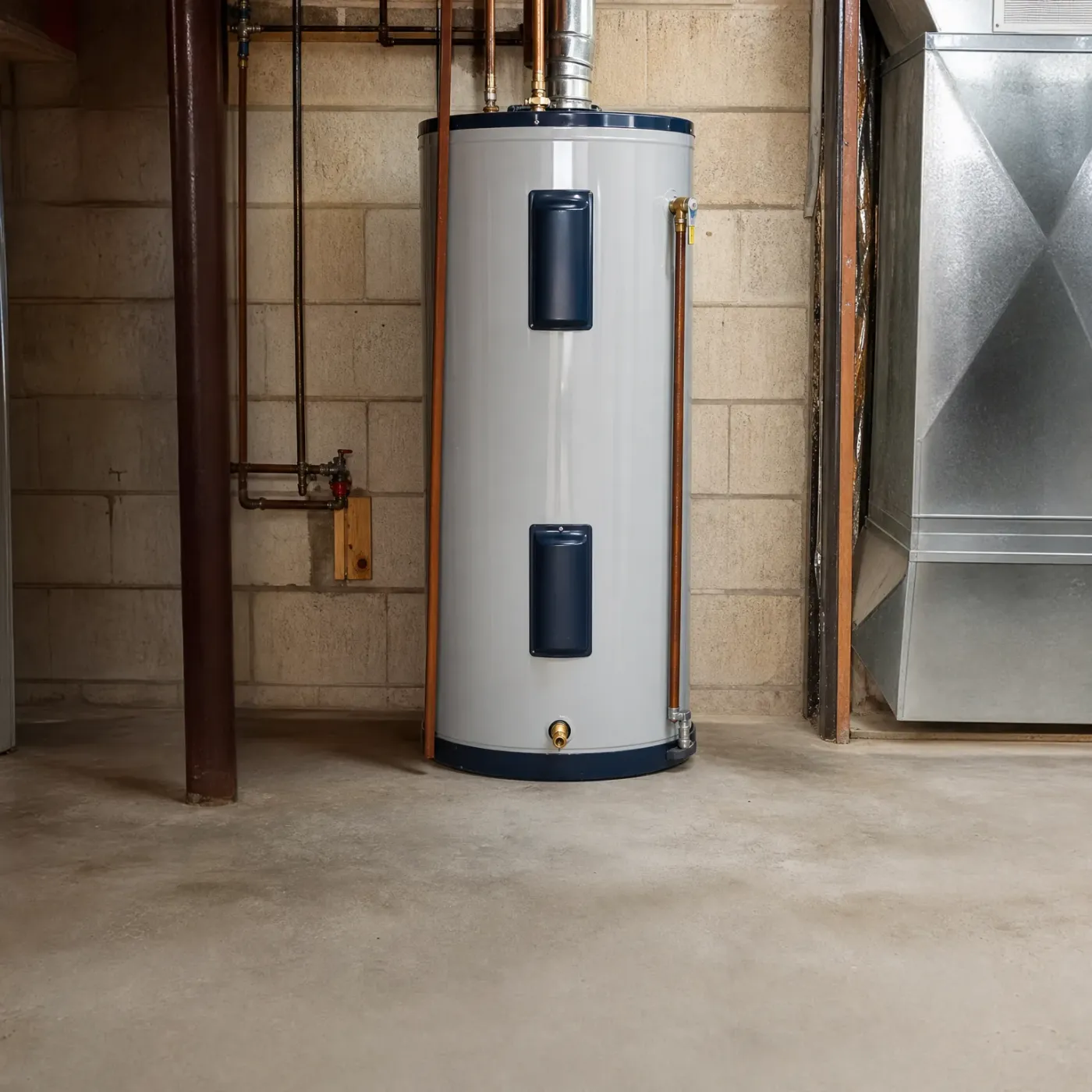
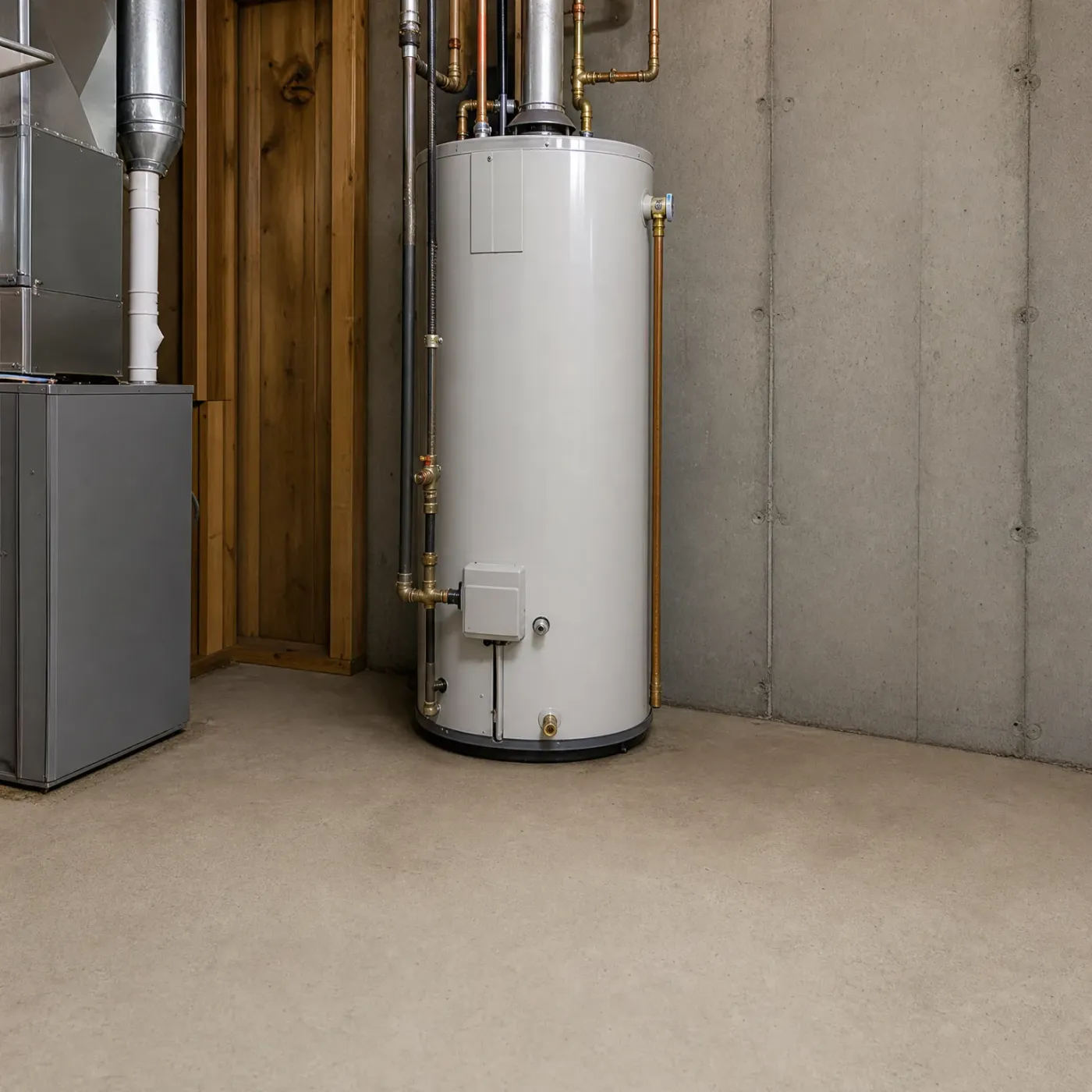
Still working the way it should
A water heater in good shape heats on demand and holds the temperature you set. The tank is dry outside, the fittings are tight, and the connections at the top show no corrosion. Copper piping stays bright, not green or crusted.
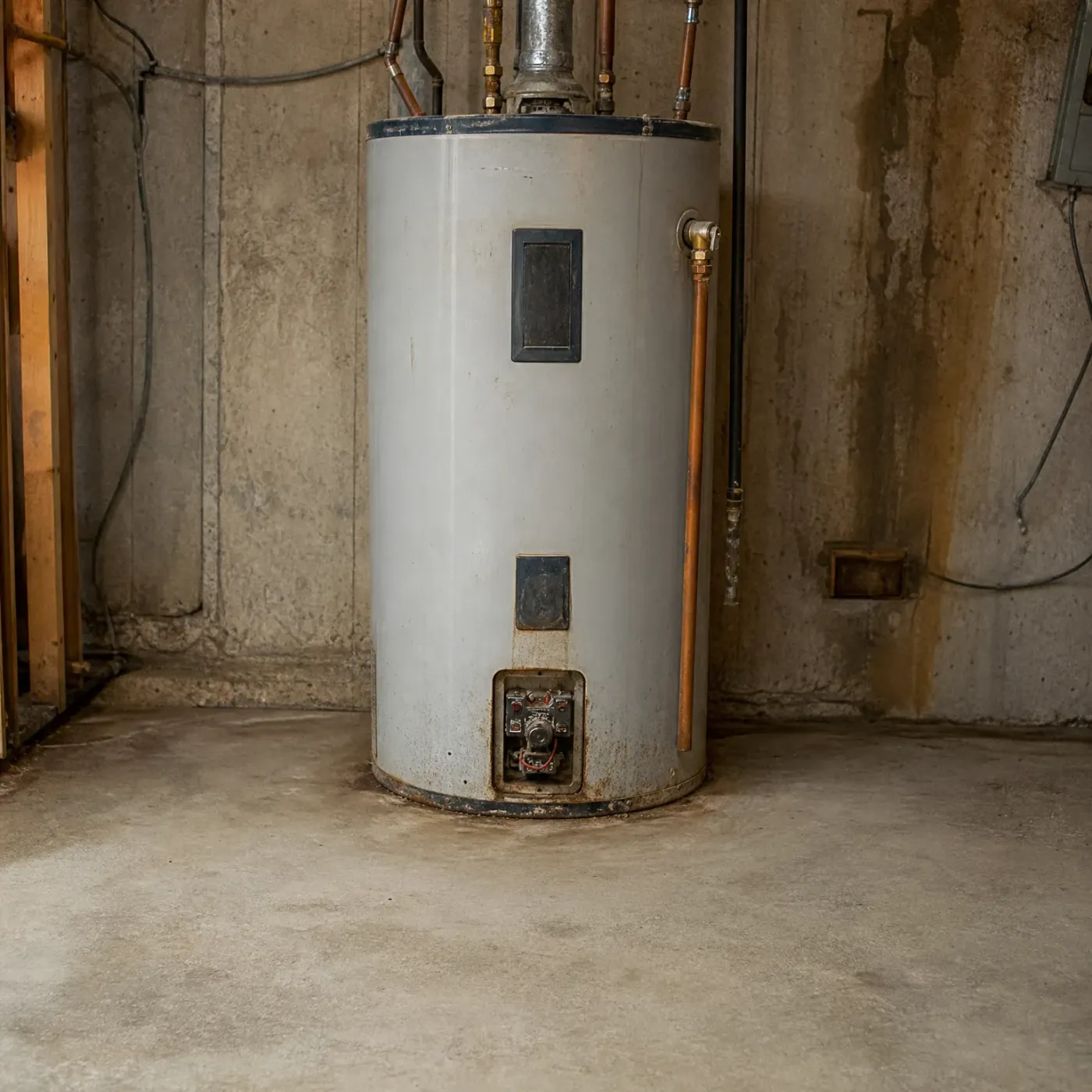
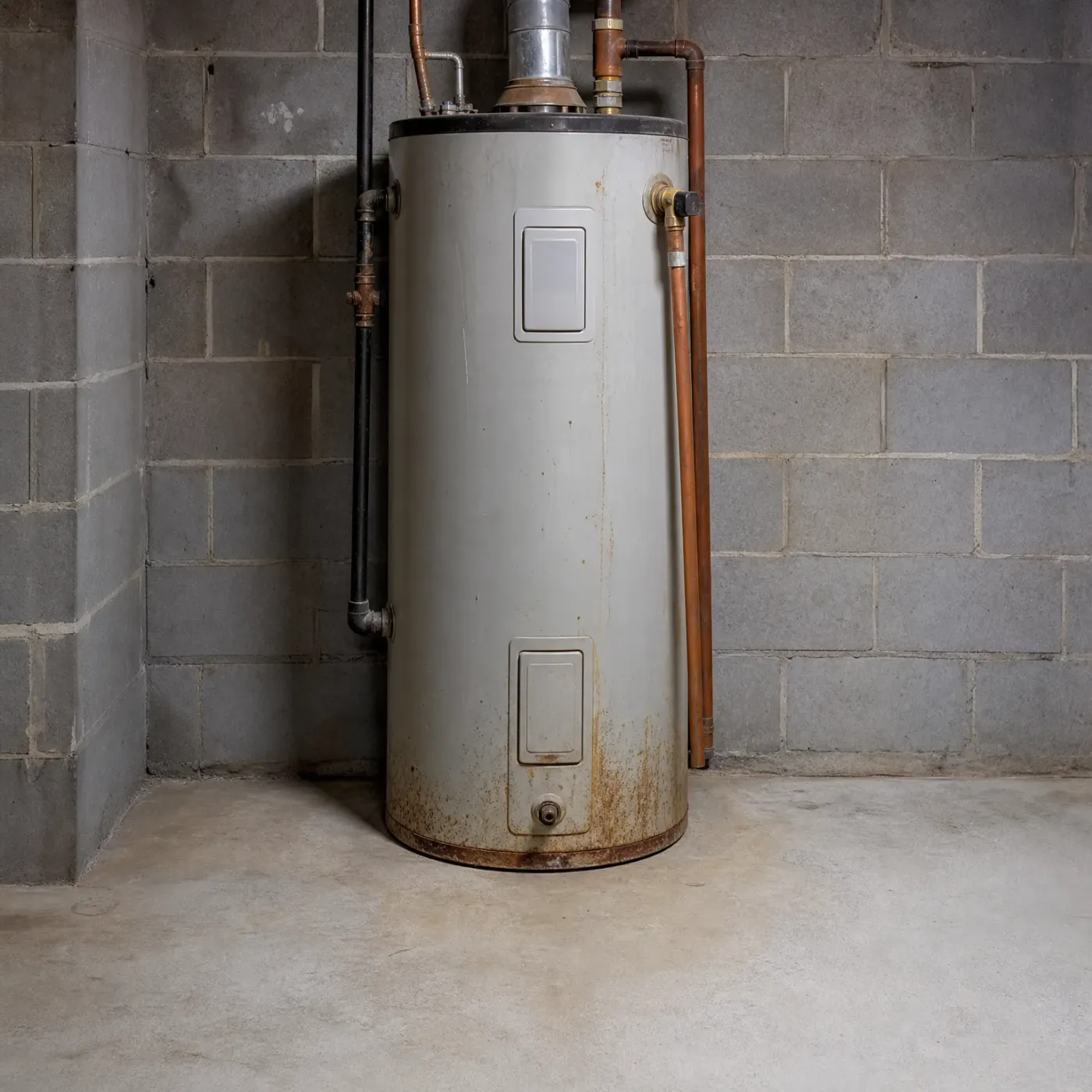
Showing its age
Rust on the tank or around the access panels means the steel underneath is breaking down. Once corrosion reaches the surface like this, it's already worked through from the inside. A unit in this state can fail without much warning.
What's going on with your water heater
You turn on the hot tap and the water takes longer to warm up than it used to, or it doesn't get as hot as it should. There might be a puddle near the base, or the floor around it stays damp even after you wipe it down. You've heard a knocking or rumbling sound from inside the tank that wasn't there before. The water coming out looks rusty or has a metallic smell. If the tank itself is rusting, that's the steel breaking down from the inside, and it won't hold up much longer. A unit working harder than it should to do the same job also means it's pulling more power to get there, and on an electric water heater in Hawaii, that shows up on your bill before it shows up anywhere else.
Tight fittings, no rust at the base, and a steady recovery time mean this tank still has life in it, even in a hot, humid basement.
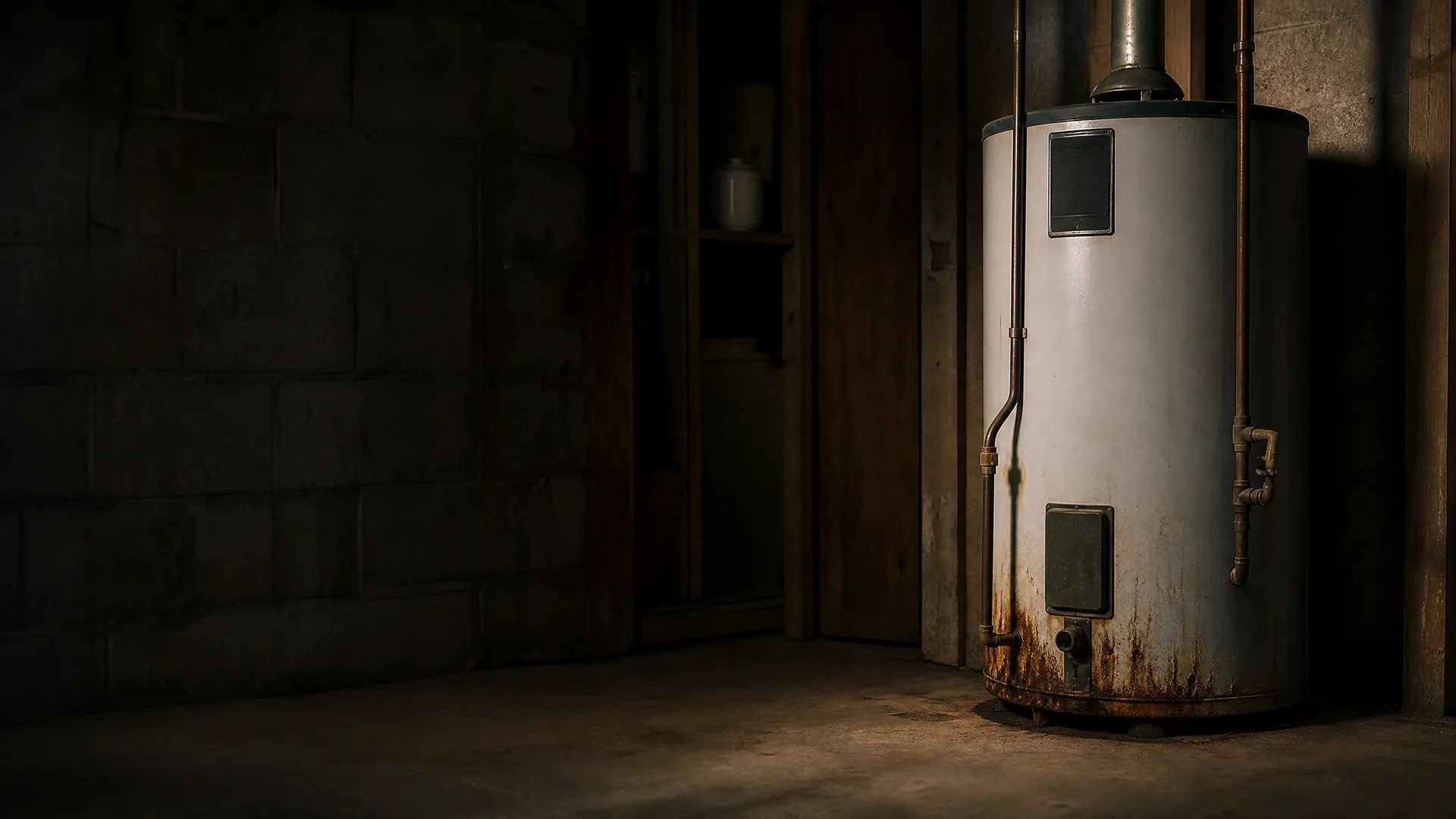
Rust climbing the seams and pooling at the base means the tank itself is failing, not just a part inside it.
A water heater that's starting to go doesn't announce itself all at once. It's rust in the water one week and a popping sound the next, and in between you're left guessing whether it's worth calling someone or just waiting to see what happens. That guessing costs you here more than most places, because an electric water heater losing efficiency is burning power at some of the highest rates in the country, every single day you put it off. Tracking down a contractor on your own means separate calls, repeating the same description of the rust and the noise to each one, then sitting with quotes you can't really compare because nobody saw the same thing. Handing that off means you explain it once, to one contractor who takes it from there, and you go back to dealing with a tank that's already asking too much of your patience and your power bill.
An electric water heater losing efficiency doesn't just run worse. It runs longer to hit the same temperature, and every extra minute shows up on a power bill that's already among the highest in the country.
A tank nearing the end of its life can lose a third of its recovery speed before it ever fails outright. By the time it stops working, you've likely paid for that decline for months.
43.1% of homes statewide heat with electricity
Odds are your water heater runs on electricity rather than gas. That matters here because electric rates are so high, so a tank losing efficiency costs you more here than it would almost anywhere else, and a failing one is worth catching early.
ACS 2020-2024 5-year B25040
You're down in the utility room after dinner, checking on a load of laundry, and you catch it this time instead of walking past it. The base of the tank has gone orange, streaks running down from one of the fittings and pooling where the floor meets the wall. The room's warm the way it always is this time of year, but the tank itself feels warmer still, a low heat coming off the metal when you rest your hand against it. You crouch down and touch the rust. It's wet. You stand there a minute, listening to the hum of it, before you go find a flashlight to see how far up the streaks go.
Rust at the base, a tank that won't hold its temperature, a power bill that keeps climbing even though nothing else changed. Any one of those is reason enough to get the tank looked at, and if you're seeing more than one, it's past time. You don't have to figure out on your own whether it's the end or just a part worth fixing first, and you don't have to spend an evening calling around, explaining the same thing to three different companies, and sorting through quotes that don't match up. Hand off that part and get matched with a contractor who knows electric water heaters and Hawaii's rates, and let them call you to sort out what the tank actually needs. What you know for certain is this: a water heater that's failing doesn't get cheaper to run while you wait on it.
Water Heater Installation
Get the right pro for your water heater
A local pro who knows water heaters gets your details and gets in touch.
Describe your water heater job, and a local pro who handles it gets in touch.
Send the form and stop researching installers for the new water heater.
One request ends the search for a water heater installer.
Skip collecting and comparing quotes for the new water heater.
Fill out one short form instead of calling around.
One installer gets your project, so there's no bidding war over it.
Your request goes to one pro, not a list of companies.