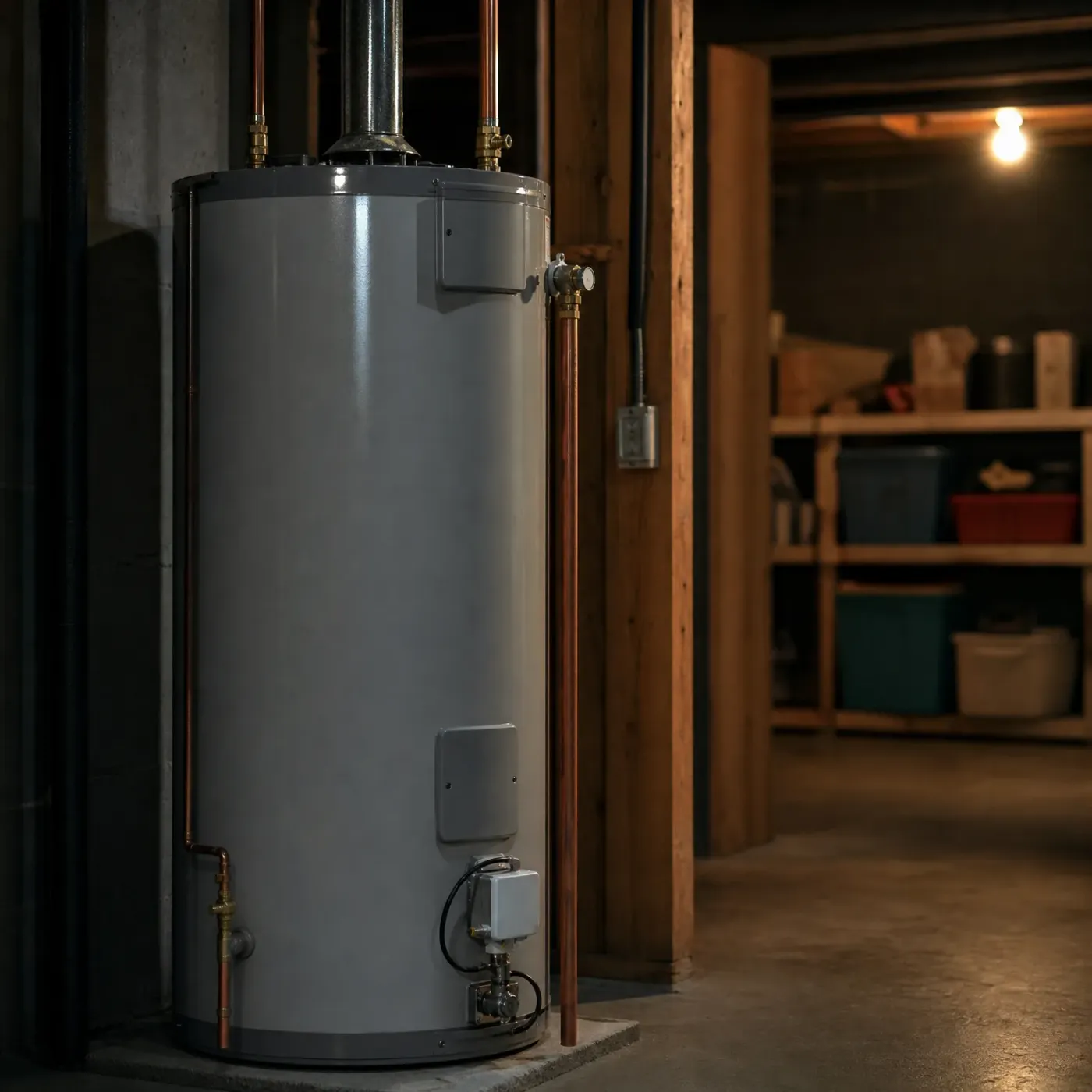




A large gray cylindrical water heater with copper pipes and a metal flue stands on a concrete pad in a dim basement, with wood framing and shelves of storage bins lit by a bare bulb behind it.

Skip calling around

Why your water heater is leaking in Hawaii

A leaking water heater usually means a tank that's failing or a fitting that's worked loose, and this page walks through which one it is and what happens next. Most homes here run on electric water heaters, so a tank going bad isn't rare. Skip the search for someone qualified, the calls to a few companies, and repeating the same explanation each time. One licensed local contractor gets the details once.

Skip the calls

A leak almost always comes from one of two places: the tank itself or one of the fittings on top. If the tank is rusting through, water seeps slowly down the side and pools underneath, and that tank needs to be replaced, not patched. If it's a fitting, the culprit is usually the cold water inlet, the hot water outlet, or the temperature and pressure relief valve, and any of those can often be repaired or swapped out without replacing the whole unit. The pressure relief valve is worth a close look on its own. It's designed to open when pressure inside the tank builds too high, so water dripping from its discharge pipe can mean the valve is doing its job, or it can mean the valve itself has failed and needs replacing. With most homes here running electric water heaters, a tank failure isn't unusual, and catching it early matters more in a humid climate where a slow leak can go unnoticed until it's done damage to the floor or wall around it.

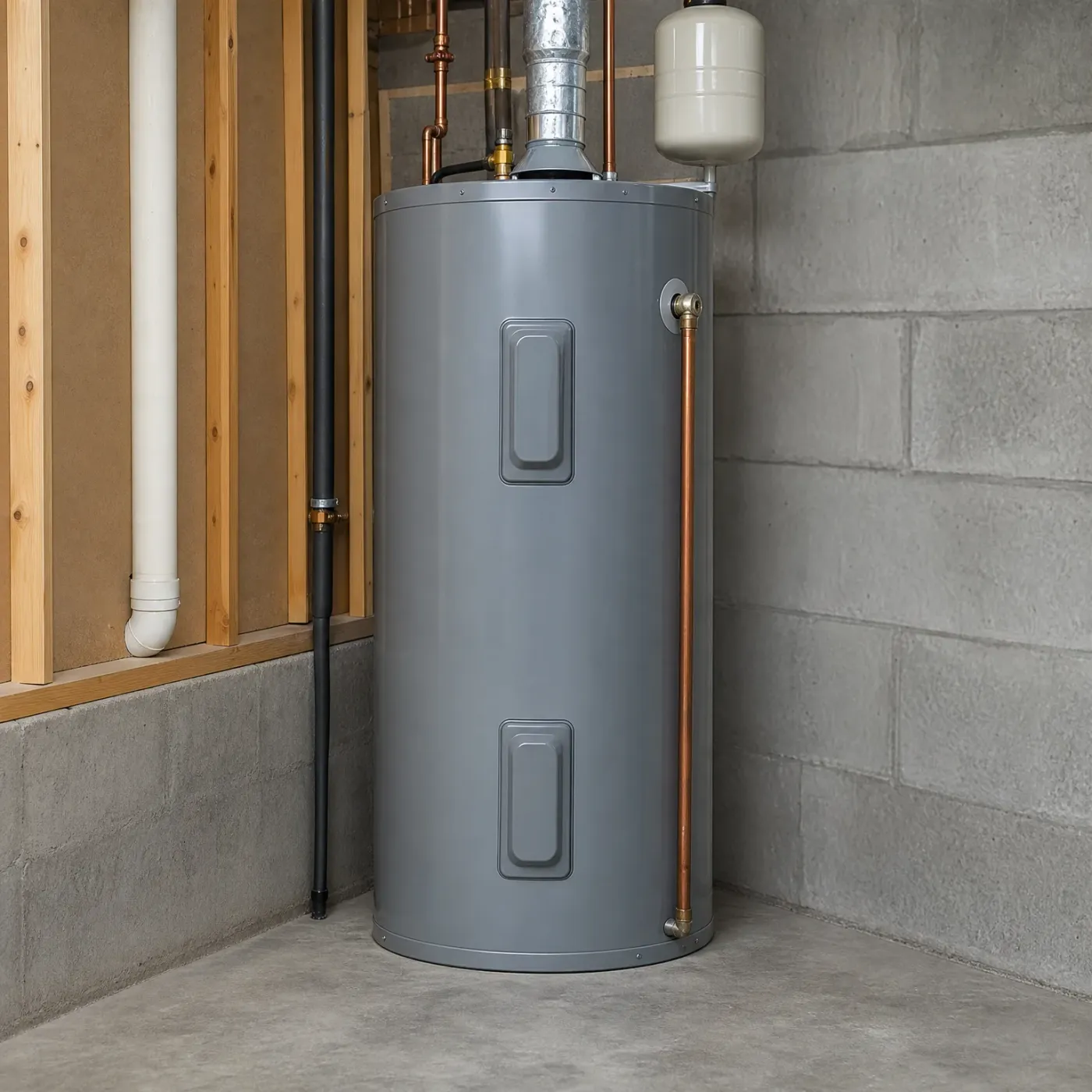
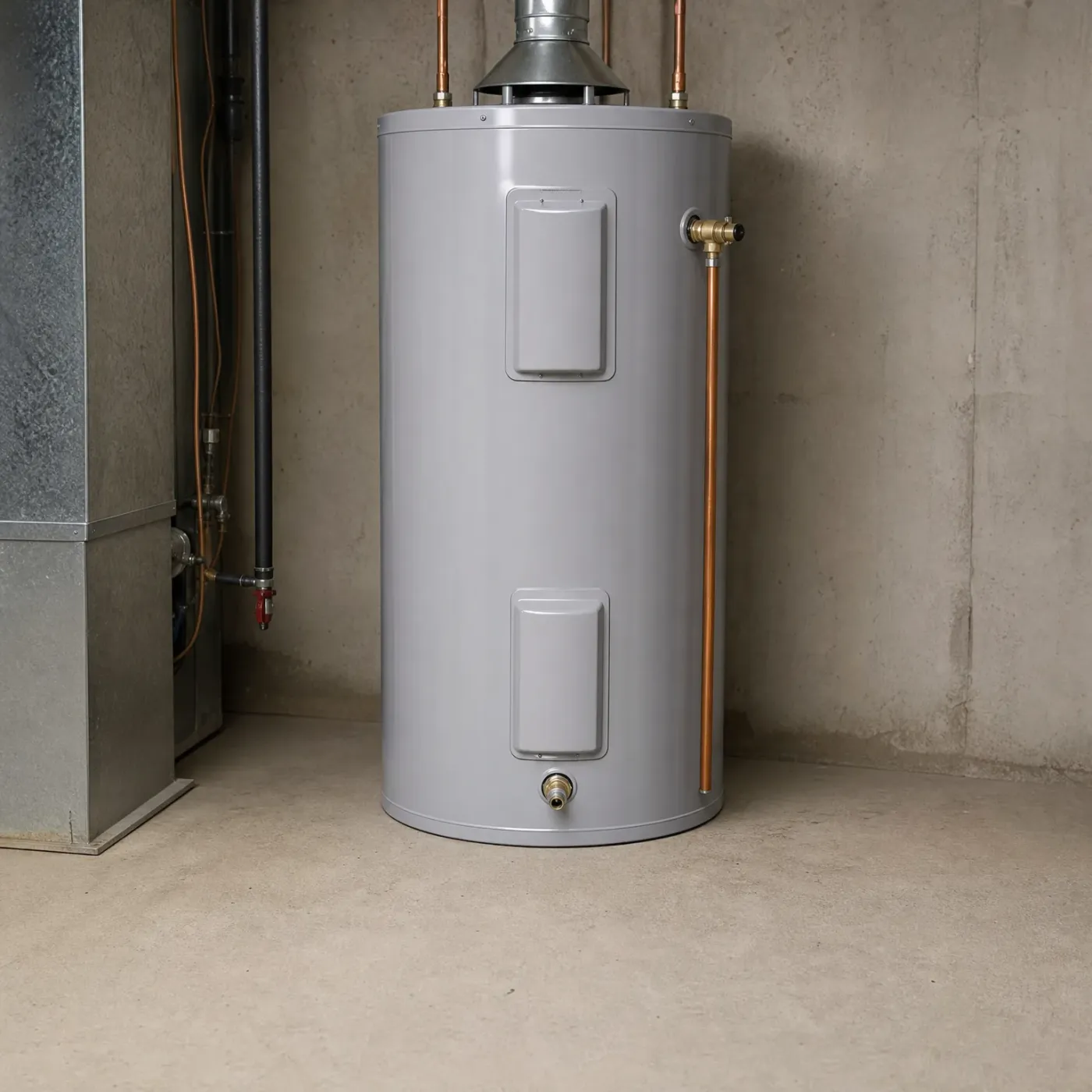
A gray cylindrical water heater with copper piping and a flue stands on a concrete floor in a basement corner beside ductwork and metal equipment.
This tank shows no rust and no staining on the floor, the kind of unit a fitting leak comes from, not the tank itself.
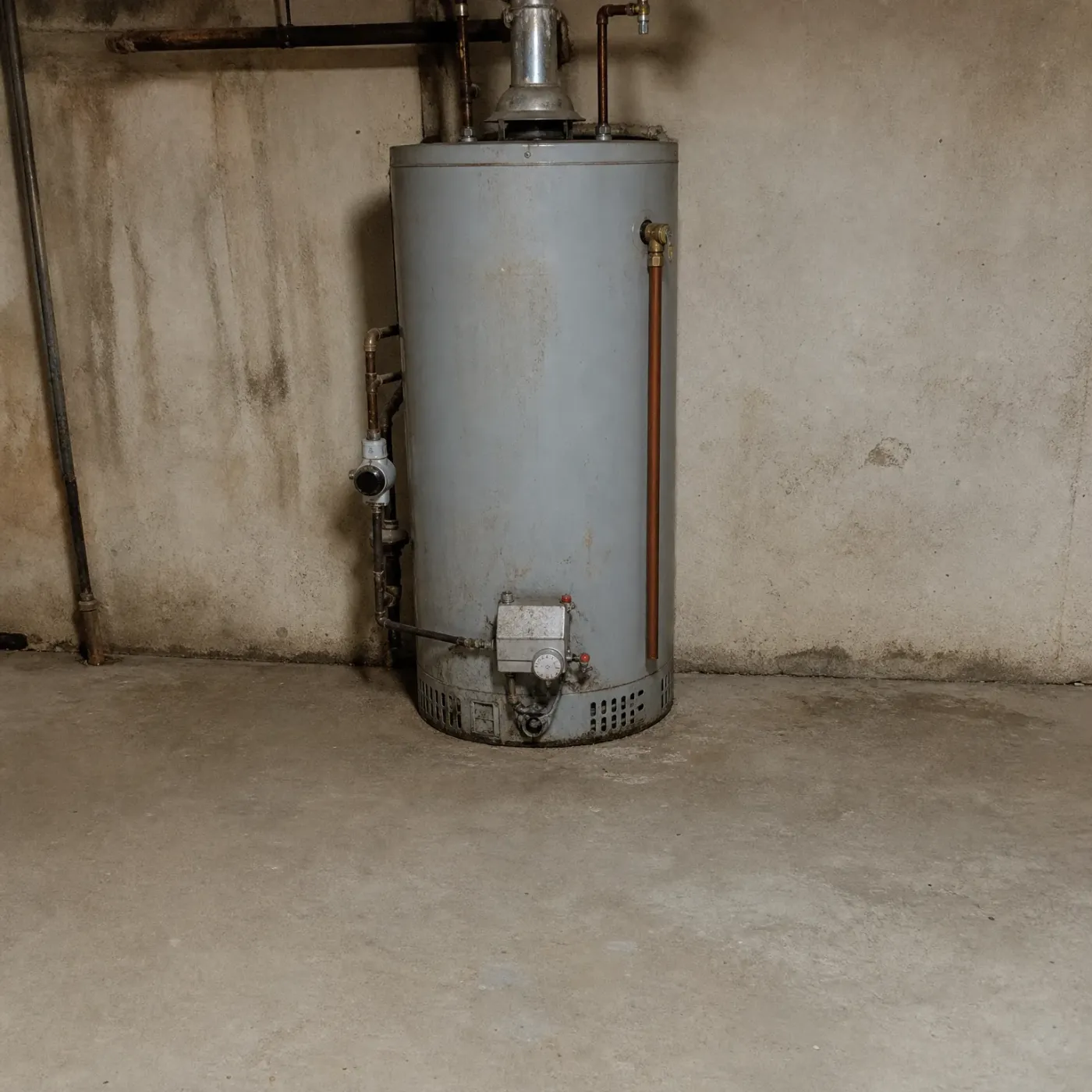
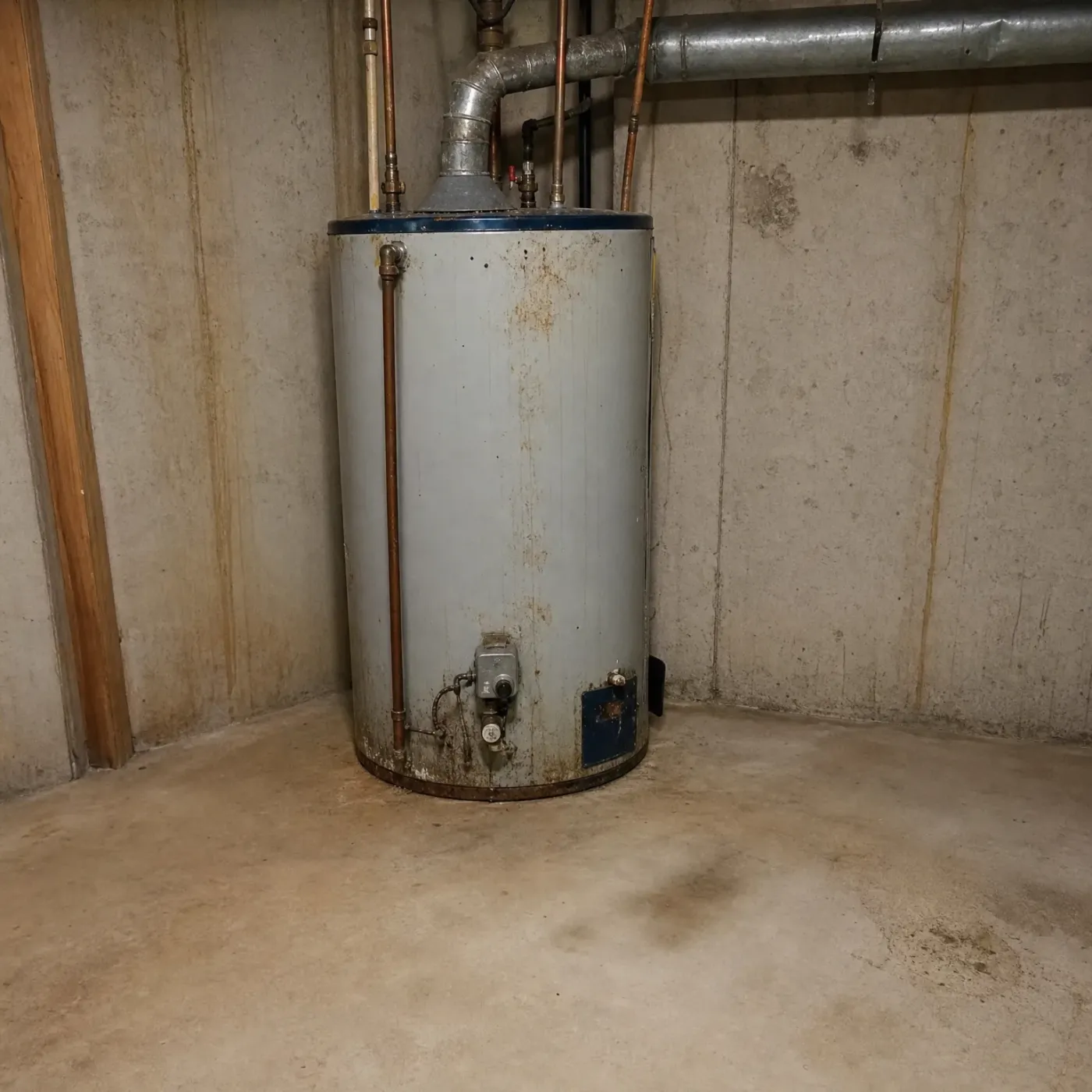
An aging gas water heater with rust streaks stands in the corner of a concrete-walled basement, with copper pipes and a metal flue duct running overhead.
This tank is rusted through the body with staining on the concrete below, a sign the tank is failing and needs replacement.

Every tank is lined with glass to keep the steel underneath from touching water directly. That lining holds up for years, but once it cracks, rust gets a foothold and starts working through the metal from the inside. You won't see it happening. The outside of the tank can look fine while rust is already eating through, and by the time a pinhole opens up and water starts to seep, the damage underneath is further along than it looks. The anode rod is supposed to take that corrosion instead of the tank, drawing the rust to itself until it's used up. After that, the steel starts absorbing it. Fittings fail differently. The cold inlet, the hot outlet, the relief valve, each one seals with a washer or a threaded joint, and any of those can loosen over time and start to drip from a single spot. On electric units, the gaskets around the two heating elements can go the same way, sending water down into the cabinet instead of down the side of the tank.

How a Water Heater Starts Leaking

  • The tank holds water against the glass lining that coats its inside wall, and once that lining cracks, the steel underneath starts to rust.
  • Rust works from the inside out, so a tank can look fine on the outside for months before a pinhole opens and water starts to seep.
  • The fittings on top, the cold inlet, the hot outlet, the temperature and pressure relief valve, each seal with a washer or a threaded connection that can loosen over time.
  • A loose fitting drips from one spot you can find and often tighten or replace, while a tank leak spreads slowly down the side and pools underneath.
  • The anode rod inside the tank is meant to corrode first and protect the steel, and once it's used up, the tank itself starts taking the damage.
  • Electric water heaters have two heating elements, and a failed gasket around either one can leak water down into the cabinet below.
A man with grey hair and stubble in a dark sweater sits on a grey sofa indoors, looking off to the side, with a potted plant and a sunlit window behind him.
A man with gray hair, a beard and glasses, wearing a dark green sweater, sits on a gray sofa in a sunlit living room with a potted plant, table lamp and wooden sideboard behind him.
A middle-aged man with graying hair and a short beard sits on a blue sofa in a living room, looking toward a window, with a bookshelf, lamp and framed picture in the background.
A man with graying curly hair and a dark green sweater sits on a gray sofa in a sunlit living room, looking off to the side, with a framed picture, shelving, an armchair and a window with sheer curtains behind him.
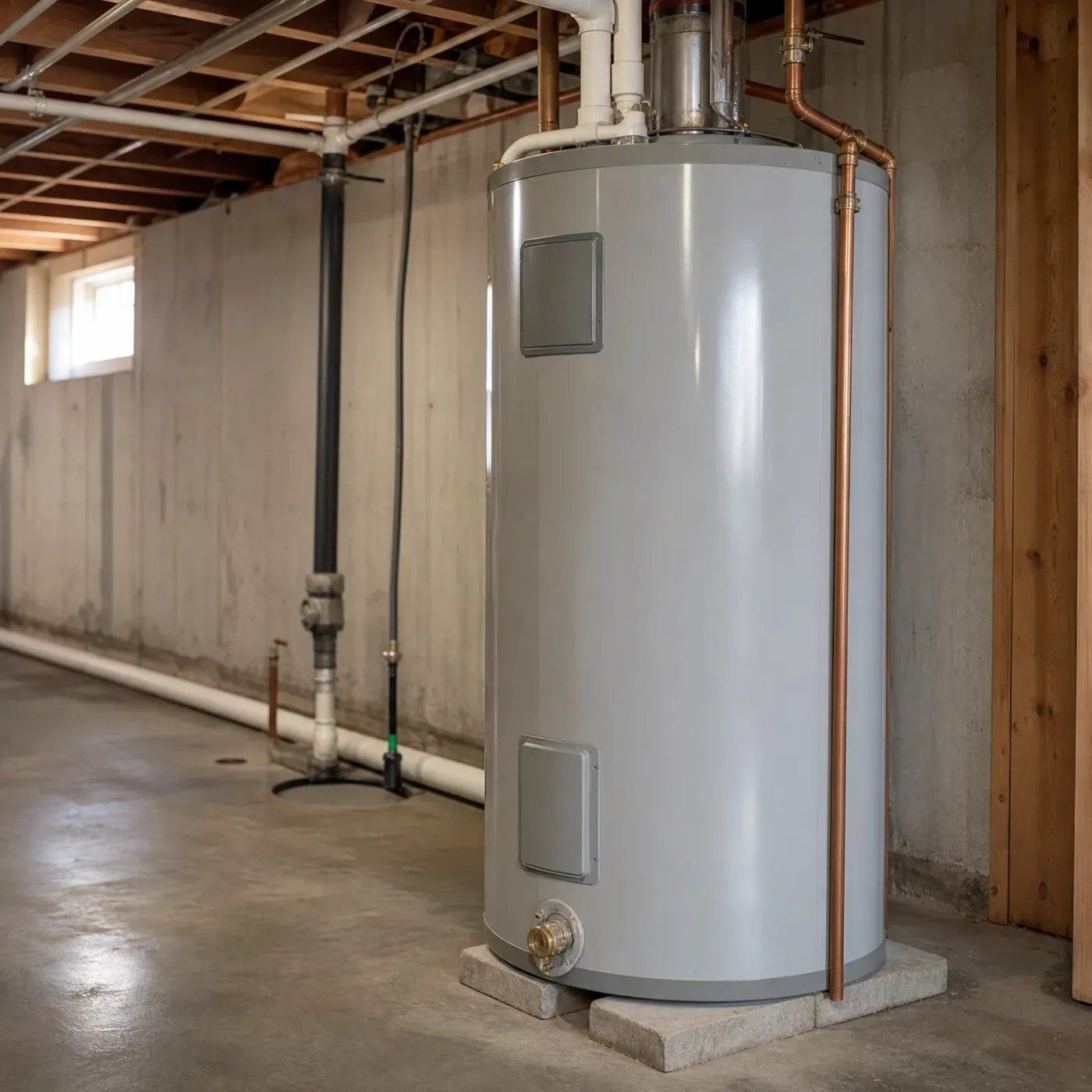
A large white cylindrical water heater on concrete blocks in a basement with poured concrete walls, exposed joists, copper and PVC piping, and a small window.

Describe it once

Your request stays with one local pro.

Explain the job once and skip repeating it on every call.

Answer a few questions

Asking costs nothing, and the choice to hire stays yours.

How do I know if it's the tank or just a fitting?

You can see water somewhere near the water heater, but you don't know yet if that means a new tank or a quick fix. Before you call anyone, it helps to know where to look and what each sign actually points to, since fittings and tanks fail in completely different ways and one costs a lot more to fix than the other.

Check where the water starts, not just where it ends up

Follow the water to where it's actually coming from, not just where it's pooling. Fittings sit on top of the tank, so a leak there drips down the side and you can usually find the wet connection by hand, the inlet, the outlet, or the pressure relief valve. A tank leak is different. Water seeps from the seams or the bottom of the tank itself, and you'll often see rust staining on the metal before you see standing water on the floor. If the tank feels warm or wet along its body rather than just at a connection point, that's the tank, and in the humidity here, any moisture sitting around a water heater will show up fast, so don't wait to check it.

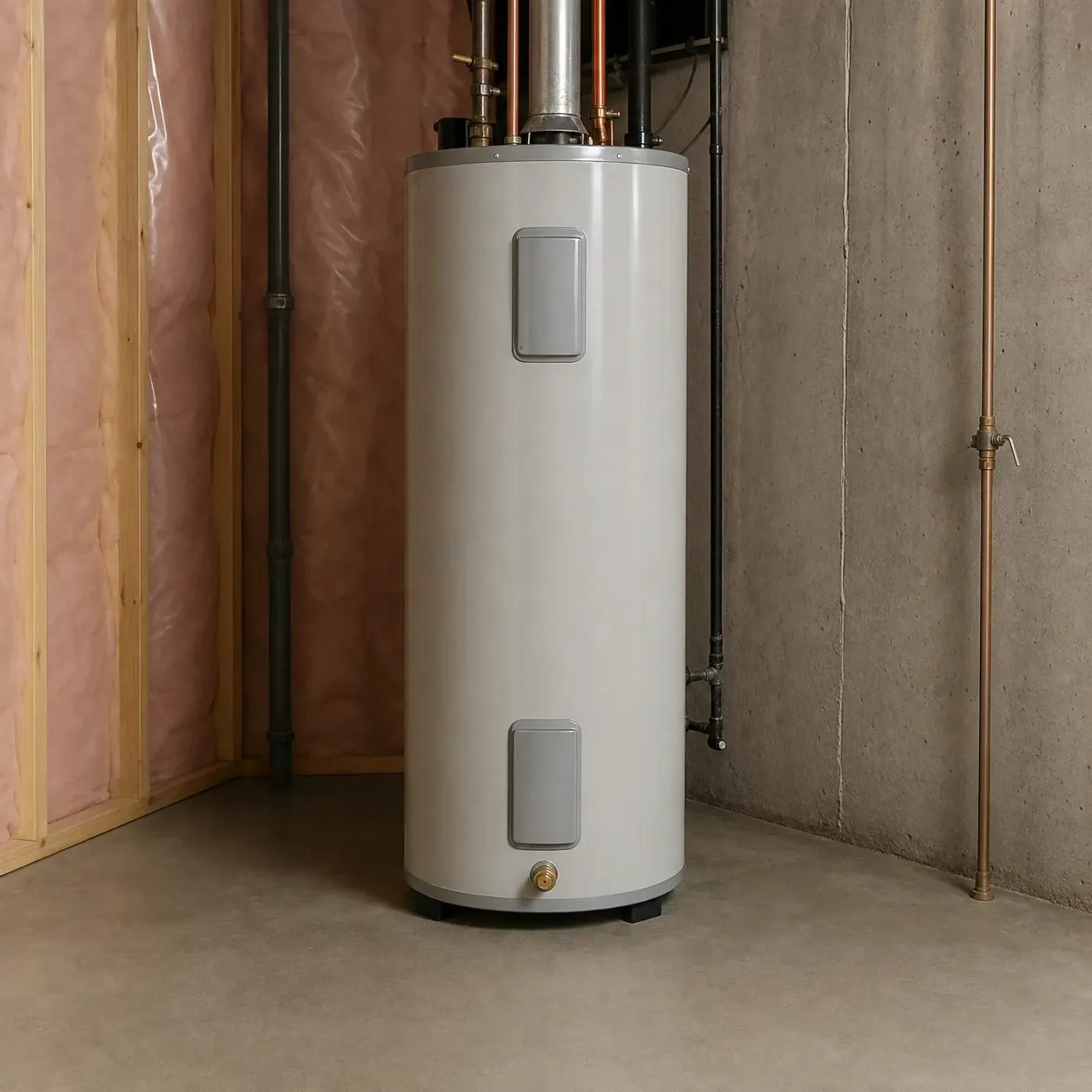
A white cylindrical water heater with two access panels and a brass drain valve stands on a concrete floor in a basement corner, beside a pink-insulated stud wall and a concrete wall with copper and black pipes.

Tank still sound

This is what a water heater looks like with no leak yet. The copper and black iron pipes overhead are dry, and the floor around the base is clean. A fitting leak would show first at one of those connections, not down the side of the tank.
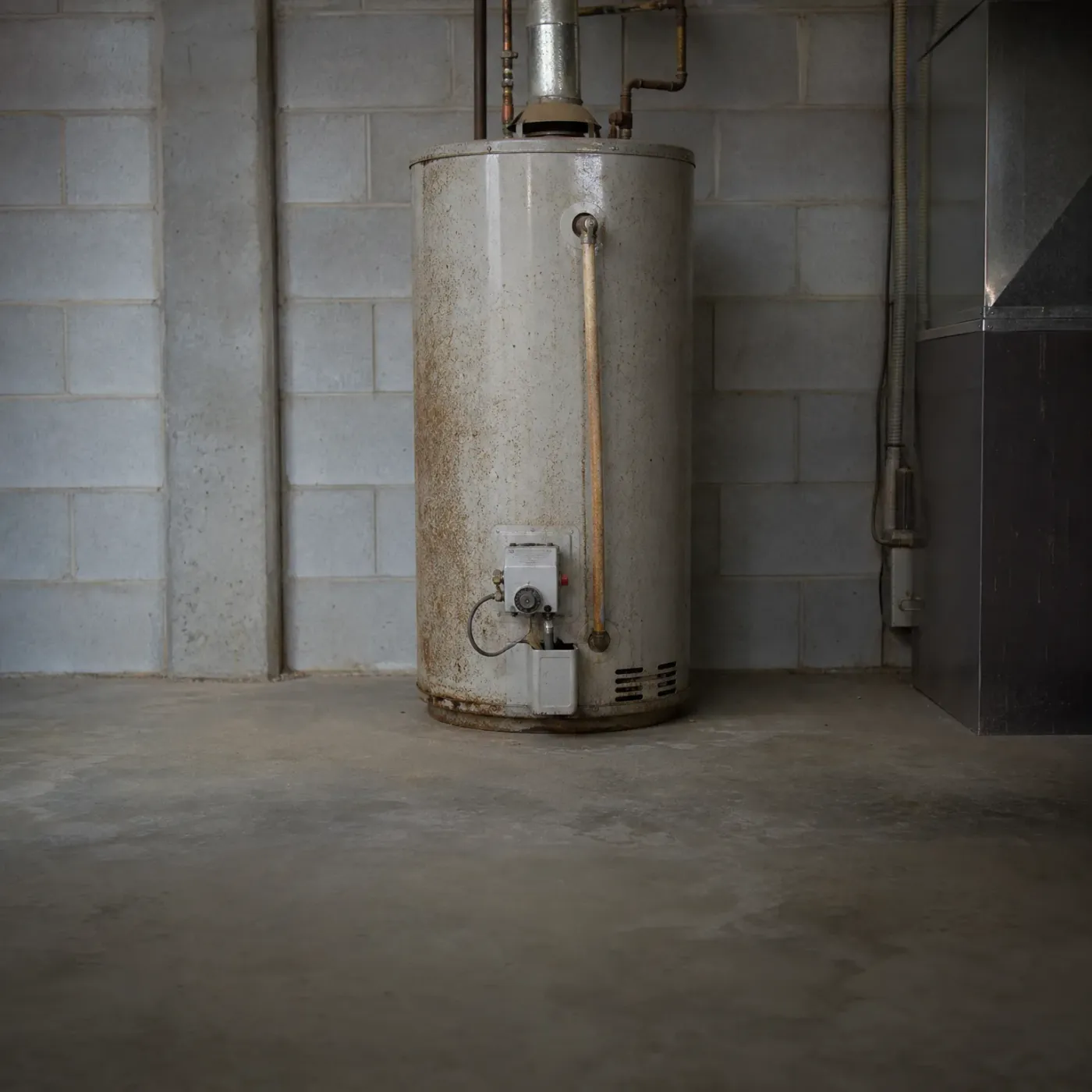
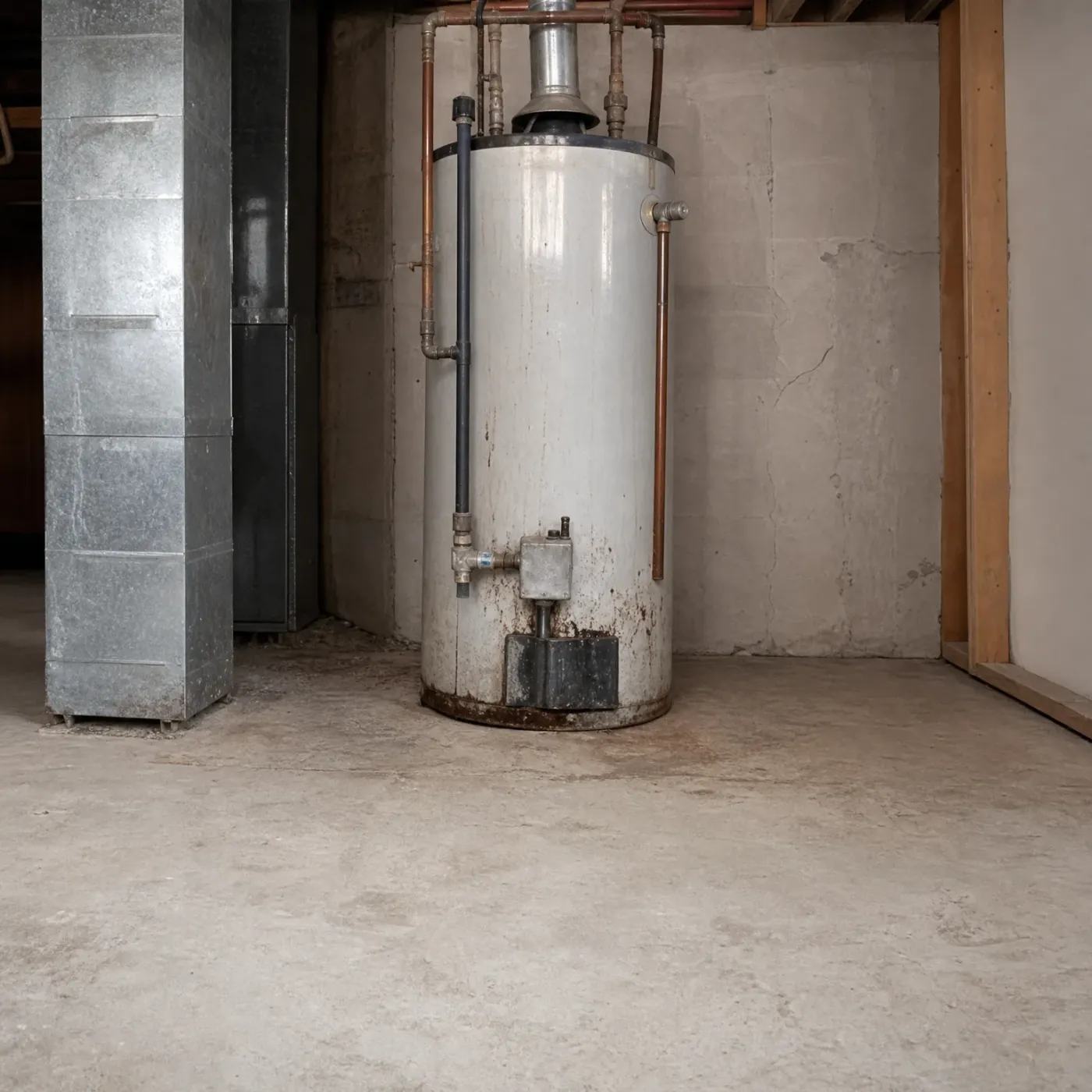
A rusted gas water heater with a flue pipe stands against a concrete block wall on a bare concrete floor, next to a dark metal duct or furnace cabinet at right.

Tank rusted through

Rust has eaten through the steel here, and the staining on the concrete shows where water has been draining for a while. A tank in this shape in a Hawaii home is done. It gets replaced, since there's no patch that holds once the lining has failed like this.

An old rusting cylindrical gas water heater with copper and steel pipes and a flue stands against a concrete basement wall beside metal ductwork on a bare concrete floor.
Before you get your water heater repair
A gray cylindrical water heater with copper piping and an expansion tank stands in a basement corner beside a concrete block wall and exposed wood framing.
After you get your water heater repair
  1. Water sits inside the tank against the glass lining

  2. The lining cracks and the steel wall starts to rust

  3. Rust eats through from the inside until a pinhole opens

  4. Water seeps down the tank wall and pools on the floor

43.1% of homes statewide heat with electricity

Electricity heats water in most Hawaii homes, including likely yours. Electric tanks fail the same way over time, rust eating through the glass lining until a pinhole opens. That slow tank failure, not a bad fitting, is why so many leaks here turn out to need a full replacement.

ACS 2020-2024 5-year B25040

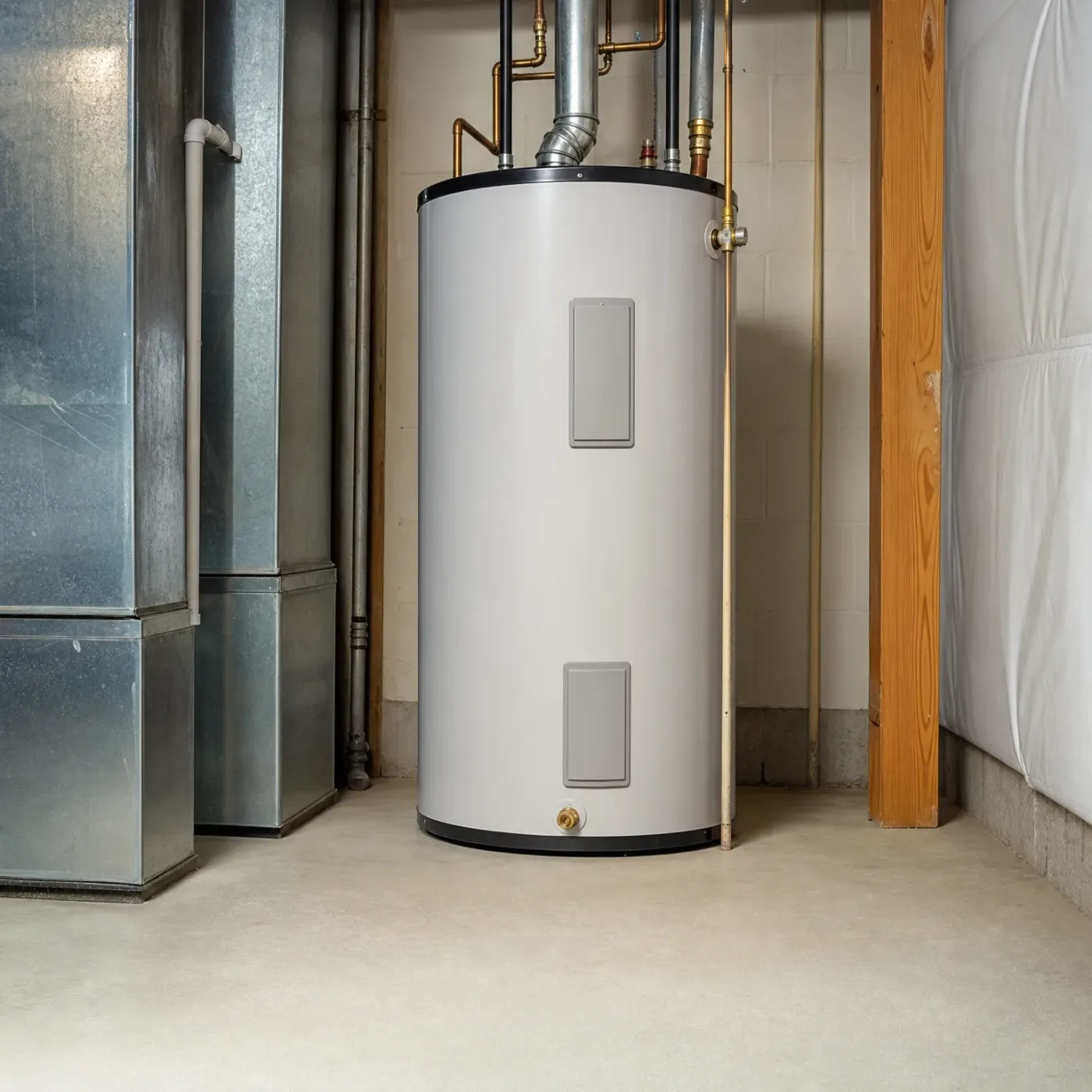
A white cylindrical water heater with two access panels stands on a concrete floor in a basement corner, beside galvanized ductwork, copper and metal pipes, a wooden post, and a concrete block wall.

Fittings dry, tank sound

This electric tank shows the two access panels, the drain valve, and the copper and galvanized lines overhead all dry and tight. No staining on the floor beneath it. A unit like this is still holding water the way it should.

An older gray cylindrical gas water heater with copper and steel piping and a flue, standing on a concrete floor against a stained concrete wall.

Tank wall giving out

This one sits against bare concrete with the flue still rising from the top, but the tank body has rusted through and the concrete below is stained. Once the wall is rusted like this, a contractor replaces the tank rather than chase the leak with a wrench.

A closed silver laptop and a ceramic mug of dark coffee sit on a wooden table in front of two chair backs, with a kitchen counter, tiled backsplash, wooden cutting boards, a vase of greenery and a potted plant by a window behind.

Where that leaves you

Water on the floor by your water heater means the tank is rusting through or a fitting has worked loose, and the only way to know which is to look closely at the tank wall, the fittings on top, and where the water is actually pooling. Once you know which one it is, the next step is either a new tank or a straightforward repair.

Either way, a licensed contractor who works on electric water heaters in homes here all year has seen both kinds of leaks plenty of times and knows what to check first. That saves you from searching around, calling a few places, explaining the same leak over and over, and sorting through quotes to figure out who actually knows what they're looking at. You send the details once, to one contractor local to you, and they take it from there.

A living room corner with a light beige sofa holding a textured taupe cushion, a large ceramic vase of olive branches by a window, a framed neutral artwork on the wall, and a dark bowl with stacked books in the foreground.
A woman with shoulder-length brown hair wearing a beige knit cardigan sits in a gray upholstered armchair near a window, looking off to the side with a slight smile, with bookshelves blurred in the background.
A woman with her hair in a bun holds a sleeping young child against her chest, both wrapped in a textured beige knit blanket on a sofa in a dimly lit room with a lamp, framed picture, and bookshelf behind them.

Water Heater Repair

No phone calls to make

Your request goes to one pro, not a list of companies.

A black-framed smartphone standing upright against a plain white background, its screen filled with solid green.
RepairWater HeaterHawaii
Step 1 of 2

What ZIP code is the job in?