Mini Split Installation in Honolulu, HI
Tell us about the house, and a licensed contractor who covers Honolulu County will get in touch.
Tell us about the job
It takes about a minute.
A mini-split that runs every day of the year
Honolulu does not give a mini-split a season off. Summer afternoons average 85°F and winter nights only drop to 66°F, so the system is moving heat out of the house every month of the year, not just a few. There is no real heating load here, which means the unit spends its life doing one job, cooling, day after day.
That kind of steady demand is why the efficiency rating matters. A mini-split installed new has to meet 14.3 SEER2 for cooling and 7.5 HSPF2 for heating, the federal minimum for split-system heat pumps. In a place where the compressor runs twelve months a year, that cooling rating is the number doing the work.
- 66°F
- the average winter night it heats against
- 85°F
- the average summer afternoon it cools against
Hawaii requires HVAC contractors to hold a state license.
The license is issued to the contractor, not to each job, so it covers the business across every project it takes on rather than certifying this particular installation. Work under $1,000 falls outside that requirement, but a mini-split installation runs well past that mark, so this is a licensed contractor's job.
Because Hawaii licenses the contractor, that license is what stands behind the work here. Most cities and counties in Hawaii also require a permit for this kind of installation, with an inspection once the work is done, which checks the installation itself separately from the contractor's license.
Source: Hawaii Department of Commerce and Consumer Affairs
- Is a mini split worth it?
- In Honolulu, yes, because homes here need cooling twelve months a year and a mini split is built for exactly that job. There's no ductwork losing air on the way to the room, and each head has its own thermostat, so you're not cooling rooms nobody's in. Since the house is asking for cooling every month of the year, the system gets used every month too, instead of sitting idle half the year the way it might somewhere with a real winter.
- How many rooms can a mini split cover?
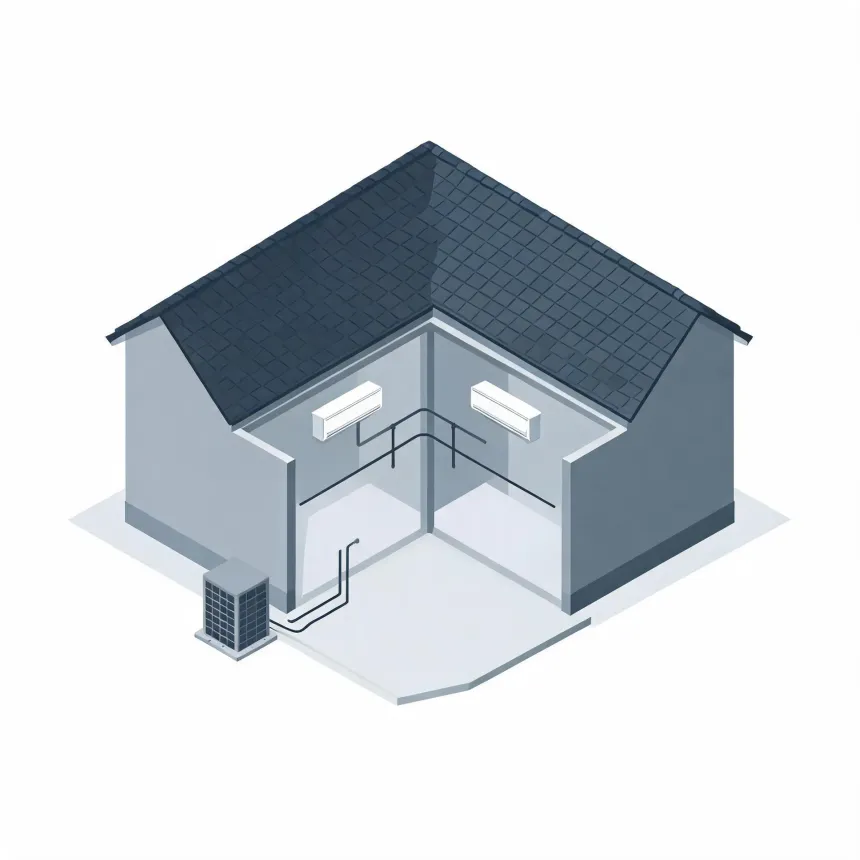
- A single outdoor unit can run more than one indoor head, so one system can cover several rooms at once. How many depends on the size of each room and how the contractor divides the load across zones, so that number is worth confirming for your house specifically. A single-zone system, by contrast, is built to cover one room or one open area well.
- Can a mini split heat a whole house?
- A mini split can heat a whole house if enough zones are placed to reach every room, but in Honolulu that's rarely the point. Winter nights here average 66°F, mild enough that homes need no heat at all through the year. Where a mini split earns its place here is cooling, since that's the job the house needs every month.